
When you decide to become parents and find out that because of some or other reasons, you are not able to conceive. You decide to consult a doctor and the first thing the doctor will ask is to get some tests done. To figure out the exact problem that is causing infertility, it is important that you get those tests done and based on the results you proceed further. HSG test is one of those, which your doctor might ask you to get done before proceeding the actual treatment.
What is the HSG Test?
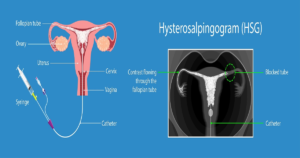
HSG stands for Hysterosalpingogram. It is to check your uterus and fallopian tubes for any kind of blockage or structural issues.
Why is the HSG test important?
While there are a lot of issues that can cause infertility. In India, 1 out of 4 women are facing infertility issues because of tubal factor or blocked fallopian tubes. The blocked fallopian tubes will not let the sperm or egg meet and make natural conception almost impossible and extremely difficult. Hence the HSG test plays a vital role in the diagnostic phase of your fertility treatment.
Why would a doctor ask you to get a HSG test done?
- When you are trying for the past 1 year and unable to conceive.
- When you want to go for IUI treatment
- If you have a history of pelvic infections, endometriosis, or a previous ectopic pregnancy.
- In case of recurrent miscarriages
- If there is any history of abdominal surgeries
How to prepare for the HSG test ?
Ideally, the HST test is scheduled after 7-10 days of your first day of period. The timing is usually before ovulation to make sure that there is no pregnancy. The uterine lining is thin and it is good for clear X-ray images.
Your Doctor might ask you the following questions before the HSG test:
- If you have any allergy to iodine or contrast dye?
- If there are any chances of pregnancy?
- If there is heavy vaginal bleeding?
- If there is any kind of pelvic infection?
- If there are any symptoms of STI?
Your doctor can recommend you to take a pain reliever like ibuprofen one hour before the test is performed to manage the cramping during or after the HSG test. Also, you should make sure to have a comfortable ride to go back home as there might be some minor cramps pain after the test.
HSG Test Procedure
The HSG test is often done within 5-10 minutes. It is a quick process and doesn’t take long. The entire HSG test process is as mentioned below:
- You will have to lie on a table with your knees bent, just like a routine pelvic exam.
- Your doctor will insert a speculum to widen the vagina and cleans the cervix with an antiseptic.
- A small, thin tube is inserted into the cervix. The speculum is then removed.
- The doctor will slowly pump the contrast dye into your uterus. You might feel some period-like cramping her which is absolutely normal.
- When the dye flows, the X ray images will be taken. The doctor will ask you to move and shift positions so the movement of dye can be analysed properly.
- The catheter will be removed when there are enough clear images for analysis and the test is done.
Is the HSG Test painful?
This is usually the most curious question for most of the women. It might feel like intense menstrual cramping that lasts only for 2- 5 minutes while the dye is being injected. A slight pinch or pressure can also be felt during insertion of the catheter. The pain level is mild to moderate.
HSG Test with Anesthesia – Generally anaesthesia isn’t required as the pain is mild and feels like intense period cramps. However, some clinics offer the test with anaesthesia at an additional cost.
HSG Test Price and Cost
In Delhi NCR, the cost of HSG test is quite affordable as compared to other invasive diagnostic surgeries. Below mentioned is the cost breakdown for HSG test procedure-
|
Service Type |
Estimated Cost (INR) |
| Standard HSG Test | ₹2,500 – ₹5,500 |
| HSG test cost with anesthesia | ₹5,500 – ₹9,500 |
| Premium Clinic / Digital HSG | ₹8,000+ |
Factors that impact the cost of HSG test –
- Type of dye that is being used : There are various types of dyes, oil based or water based. Oil based dyes are slightly more expensive and preferred because of their potential fertility-boosting flushing effect.
- Anesthesia cost : If a patient chooses to take anesthesia for the procedure, it will increase the cost as it involves an anesthesiologist and specialized monitoring.
- Imaging Technology: Premium clinics often use digital imaging to ensure the most accurate diagnosis as they provide much clearer images than older analog machines. Digital imaging techniques are relatively costlier than the older ones.
- Insurance reimbursements : Some insurance companies include these tests in their policy. You must check with your insurance company to see if you can claim the reimbursement and save money.
While cost is a factor, the HSG test provides you the clarity to take the right treatment. After knowing whether your fallopian tubes are open or blocked, your fertility expert can start a targeted treatment plan that works best for you.
Blocked HSG Test
After analysing the X ray images, if the fallopian tubes are found blocked it is called a blocked HSG test. You don’t have to worry as this doesn’t mean you can’t get pregnant but the blocked HSG test result gives you the clarity around how you should proceed further. Usually the next step is laparoscopy to clear the blocked tubes or your doctor might recommend you to choose IVF as a treatment, which bypasses the tubes entirely.
Benefits of The HSG Test
To start with, the most important benefit that you get from this test is the diagnostic clarity. There are a few more additional benefits which a patient gets after going through the HSG procedure such as:
The flushing effect: When dye is passed through the fallopian tubes, it can clear the minor obstructions like mucus plugs or small debris.
Saving time and resources: After getting the diagnostic clarity of fallopian tubes, doctors can guide you for the best suitable and simpler treatments such as IUI. This saves your money and time both which you might be spending on treatments which are not even possible with blocked tubes.
Uterus Structural health: Along with the fallopian tubes, this test also helps in finding out the uterus structural issues. This ensures there are no polyps or fibroids that might create issues in pregnancy.
Long Term Side effects of HSG Test
There are no long term side effects of the HSG test. Patients usually worry whether the dye or X rays exposure will harm the eggs, fallopian tubes or uterus. But the answer is no, The HSG test is absolutely safe for health. It does not affect your egg quality, menstrual cycles and overall health.
The X rays radiations are also minimal which is equal to the radiations that you might get naturally from the surroundings in a few days. The dye liquid is also safe and it naturally flushes out from the body within a few hours to a day.
While there are no long term effects on your health, you might feel minor discomfort for a few hours. Mild spotting for a day or two, minor pain which feels like menstrual cramps, and dizziness can be felt after the procedure.
Symptoms of pregnancy after HSG test
If the HSG procedure clears out the minor obstructions from the fallopian tubes, there will be more chances of getting pregnant naturally. The symptoms of pregnancy after HSG test are the same as normal pregnancy. Missed periods, tender breasts, mild nausea and fatigue are the most common signs that you can expect. If you are feeling such symptoms, you can confirm it with a pregnancy kit and consult a fertility specialist afterwards to proceed further in your parenthood journey.
FAQs
1. Is the HSG test painful?
It feels like strong period cramps for 5–10 minutes. Most women are back to their daily routine the same day.
2. HSG full form?
It stands for Hysterosalpingogram.
3. When is the best time to do the HSG test?
Ideally between Day 5 and Day 10 of your menstrual cycle.
Would you like me to help you book a priority consultation with Dr. Mona Dahiya to discuss your diagnostic results?