

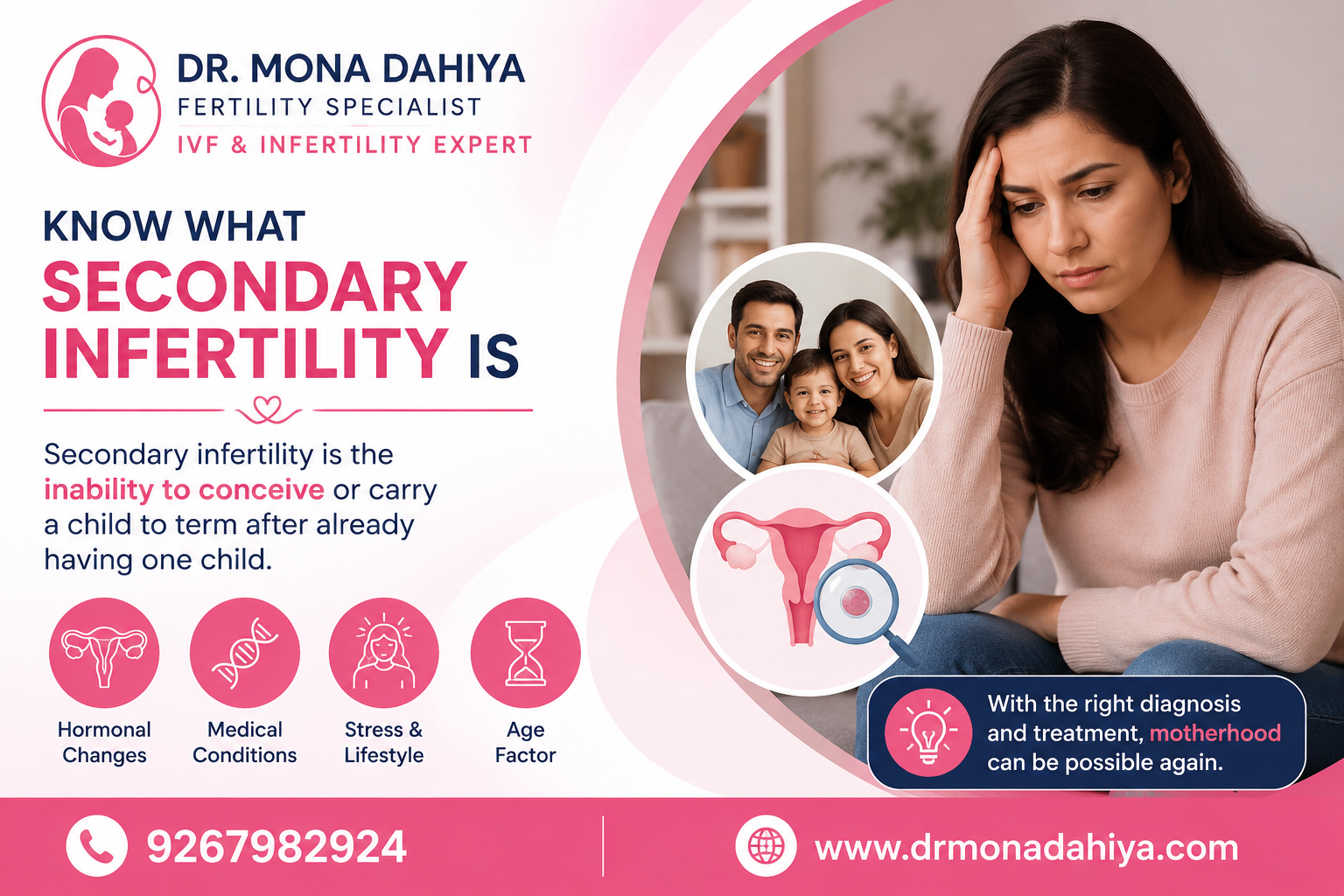
Many couples believe that once they have successfully conceived and welcomed a child, getting pregnant again will be easy. However, this is not always the case. Thousands of couples experience secondary infertility, a condition that can be emotionally overwhelming and medically confusing.
If you’re trying for another baby but pregnancy isn’t happening despite months of trying, you’re not alone. Secondary infertility is more common than many people realize, and with the right diagnosis and treatment, many couples go on to have another healthy pregnancy.
What Is Secondary Infertility?
Secondary infertility refers to the inability to conceive or carry a pregnancy to term after previously giving birth to one or more children without fertility treatment (or after a previous successful pregnancy).
Doctors generally diagnose secondary infertility when:
- A woman under 35 has been trying to conceive for 12 months without success.
- A woman aged 35 or older has been trying for 6 months without conceiving.
Unlike primary infertility, where a couple has never achieved pregnancy, secondary infertility occurs after one or more previous pregnancies.
How Common Is Secondary Infertility?
Secondary infertility accounts for a significant percentage of infertility cases worldwide. Studies suggest that nearly one-third of infertility cases involve couples who have already had at least one child.
As more women delay pregnancies due to career, financial planning, or personal reasons, secondary infertility has become increasingly common.
Signs and Symptoms of Secondary Infertility
The primary symptom is difficulty becoming pregnant despite regular, unprotected intercourse.
Additional signs may include:
- Irregular menstrual cycles
- Painful periods
- Heavy menstrual bleeding
- Very light periods
- Pelvic pain
- Pain during intercourse
- Recurrent miscarriages
- Changes in cervical mucus
- Hormonal imbalance symptoms
- Weight gain or unexplained weight loss
- Excess facial hair or acne (common in PCOS)
Sometimes, there may be no obvious symptoms at all.
Causes of Secondary Infertility
Secondary infertility can affect either partner—or both. Understanding the underlying cause is the first step toward successful treatment.
1. Age-Related Decline in Fertility
Age is one of the most significant factors affecting fertility.
Women’s fertility naturally declines after age 30, with a more noticeable decrease after 35 due to:
- Reduced egg quantity
- Declining egg quality
- Increased chromosomal abnormalities
- Higher miscarriage risk
Men also experience gradual declines in sperm quality with age.
2. Ovulation Disorders
Regular ovulation is essential for conception.
Conditions affecting ovulation include:
- Polycystic Ovary Syndrome (PCOS)
- Thyroid disorders
- Elevated prolactin levels
- Premature ovarian insufficiency
- Hormonal imbalances
- Stress-related ovulation issues
Without consistent ovulation, pregnancy becomes difficult.
3. Poor Egg Quality
Even if ovulation occurs regularly, eggs may not be healthy enough for fertilization or embryo development.
Factors affecting egg quality include:
- Advanced maternal age
- Smoking
- Obesity
- Environmental toxins
- Certain medical conditions
4. Blocked Fallopian Tubes
Healthy fallopian tubes are essential because fertilization usually occurs inside them.
Tubes may become blocked due to:
- Pelvic infections
- Endometriosis
- Previous surgery
- Tubal ligation reversal complications
- Pelvic inflammatory disease (PID)
Blocked tubes prevent sperm and egg from meeting.
5. Endometriosis
Endometriosis occurs when tissue similar to the uterine lining grows outside the uterus.
It may lead to:
- Pelvic inflammation
- Scar tissue
- Adhesions
- Blocked tubes
- Poor egg quality
- Reduced implantation
Symptoms include painful periods, pelvic pain, and painful intercourse, though some women have no symptoms.
6. Uterine Problems
The uterus must provide a healthy environment for embryo implantation.
Problems include:
- Fibroids
- Uterine polyps
- Congenital abnormalities
- Scar tissue (Asherman’s Syndrome)
- Adenomyosis
These conditions can interfere with implantation or pregnancy maintenance.
7. Previous Pregnancy or Delivery Complications
Sometimes, complications from a previous pregnancy may contribute to secondary infertility.
Examples include:
- Uterine infection
- Retained placenta
- Cesarean section scar defects
- Postpartum infections
- Surgical adhesions
8. Male Factor Infertility
Secondary infertility isn’t always caused by female reproductive issues.
Male fertility may decline because of:
- Low sperm count
- Poor sperm motility
- Abnormal sperm shape
- Varicocele
- Smoking
- Alcohol use
- Diabetes
- Hormonal disorders
- Obesity
Male factors contribute to approximately 40–50% of infertility cases.
9. Lifestyle Factors
Everyday habits can significantly impact fertility.
Risk factors include:
- Smoking
- Excess alcohol consumption
- Drug use
- Obesity
- Poor nutrition
- Sedentary lifestyle
- Excessive exercise
- Chronic stress
- Lack of sleep
10. Unexplained Secondary Infertility
Sometimes, all tests appear normal, yet pregnancy does not occur.
This is known as unexplained infertility and may involve subtle issues affecting fertilization or implantation that current testing cannot identify.
Risk Factors
You may have a higher risk of secondary infertility if you:
- Are over 35 years old
- Have irregular periods
- Have PCOS
- Have endometriosis
- Experienced pelvic infections
- Have thyroid disease
- Have diabetes
- Smoke regularly
- Are overweight or underweight
- Have undergone pelvic surgery
- Have recurrent miscarriages
When Should You See a Fertility Specialist?
Consult a fertility specialist if:
- You’re under 35 and haven’t conceived after 12 months.
- You’re over 35 and have tried for 6 months.
- Your periods are irregular.
- You have a history of miscarriage.
- You have severe menstrual pain.
- Your partner has known fertility issues.
- You have previously undergone pelvic surgery.
Early evaluation often leads to better treatment outcomes.
Diagnosis of Secondary Infertility
A fertility specialist will conduct a thorough evaluation of both partners.
Medical History
Your doctor may ask about:
- Previous pregnancies
- Delivery complications
- Menstrual history
- Sexual history
- Lifestyle habits
- Medical conditions
- Previous surgeries
Physical Examination
A general and reproductive health examination helps identify visible concerns.
Blood Tests
These may include:
- AMH (Anti-Müllerian Hormone)
- FSH
- LH
- Estradiol
- Progesterone
- Thyroid function tests
- Prolactin
These tests evaluate ovarian reserve and hormonal balance.
Ultrasound Scan
Pelvic ultrasound can detect:
- Ovarian cysts
- Fibroids
- Polycystic ovaries
- Endometrial thickness
- Uterine abnormalities
Ovulation Monitoring
Doctors may track ovulation through:
- Ultrasound follicle monitoring
- Blood hormone tests
- Ovulation predictor kits
HSG (Hysterosalpingography)
An HSG uses dye and X-rays to assess whether the fallopian tubes are open and the uterine cavity is normal.
Hysteroscopy
A thin camera is inserted into the uterus to detect:
- Polyps
- Fibroids
- Scar tissue
- Uterine abnormalities
Semen Analysis
Male fertility testing evaluates:
- Sperm count
- Motility
- Morphology
- Semen volume
Treatment Options for Secondary Infertility
Treatment depends on the underlying cause.
Lifestyle Changes
Doctors often recommend:
- Achieving a healthy weight
- Eating a balanced diet
- Exercising moderately
- Quitting smoking
- Limiting alcohol
- Managing stress
- Sleeping 7–8 hours daily
Ovulation Medications
Women with ovulation disorders may benefit from medications that stimulate egg release.
Regular monitoring improves safety and effectiveness.
Hormonal Treatment
Hormonal imbalances involving the thyroid, prolactin, or other endocrine disorders can often be corrected with medication.
Surgery
Surgery may be recommended to:
- Remove fibroids
- Treat endometriosis
- Remove polyps
- Repair uterine abnormalities
- Clear scar tissue
Intrauterine Insemination (IUI)
IUI places specially prepared sperm directly into the uterus during ovulation.
It may be recommended for:
- Mild male infertility
- Cervical issues
- Unexplained infertility
- Ovulation disorders
In Vitro Fertilization (IVF)
IVF is among the most effective treatments for secondary infertility.
The process involves:
- Ovarian stimulation
- Egg retrieval
- Fertilization in a laboratory
- Embryo culture
- Embryo transfer into the uterus
IVF is often recommended for:
- Blocked tubes
- Severe endometriosis
- Advanced maternal age
- Male factor infertility
- Failed IUI cycles
- Unexplained infertility
ICSI (Intracytoplasmic Sperm Injection)
ICSI is used when severe male infertility is present. A single healthy sperm is injected directly into an egg, improving fertilization chances.
Can Secondary Infertility Be Prevented?
Not all cases can be prevented, but these healthy habits may help preserve fertility:
- Maintain a healthy body weight.
- Eat a nutrient-rich diet.
- Avoid smoking and tobacco.
- Limit alcohol intake.
- Manage stress effectively.
- Exercise regularly without overtraining.
- Treat infections promptly.
- Schedule regular gynecological check-ups.
- Don’t delay fertility evaluation if pregnancy isn’t occurring.
Emotional Impact of Secondary Infertility
Secondary infertility can bring feelings of:
- Frustration
- Guilt
- Anxiety
- Depression
- Isolation
- Relationship stress
Many parents feel misunderstood because they already have a child. However, the desire to expand a family is deeply personal, and these emotions are valid.
Seeking emotional support through counseling, support groups, or open communication with your partner can make the journey easier.
Tips to Improve Your Chances of Pregnancy
- Track ovulation accurately.
- Have regular intercourse during the fertile window.
- Maintain a healthy BMI.
- Take folic acid as advised.
- Reduce caffeine intake if excessive.
- Manage chronic medical conditions.
- Follow your fertility specialist’s recommendations.
- Ensure both partners undergo evaluation.
Frequently Asked Questions (FAQs)
Can you have secondary infertility after a normal pregnancy?
Yes. Fertility can change over time due to age, hormonal changes, medical conditions, or complications following a previous pregnancy.
Is age the biggest cause?
Age is a major factor, especially after 35, but many other treatable causes can also contribute.
Is secondary infertility treatable?
Yes. Depending on the cause, treatments such as lifestyle changes, medications, surgery, IUI, or IVF can significantly improve the chances of pregnancy.
Can stress cause secondary infertility?
Stress alone is rarely the sole cause, but chronic stress may affect hormones, ovulation, sexual health, and overall fertility.
Should both partners be tested?
Absolutely. Since male factors account for a substantial proportion of infertility cases, evaluating both partners is essential.
Final Thoughts
Secondary infertility can be an unexpected and emotionally challenging experience, especially for couples who conceived naturally in the past. The good news is that many causes are identifiable and treatable. Early consultation with a fertility specialist, a comprehensive evaluation of both partners, and a personalized treatment plan can greatly improve the chances of another successful pregnancy.
If you have been trying to conceive without success, don’t delay seeking expert guidance. Timely diagnosis and evidence-based treatment can help you move closer to growing your family.

