

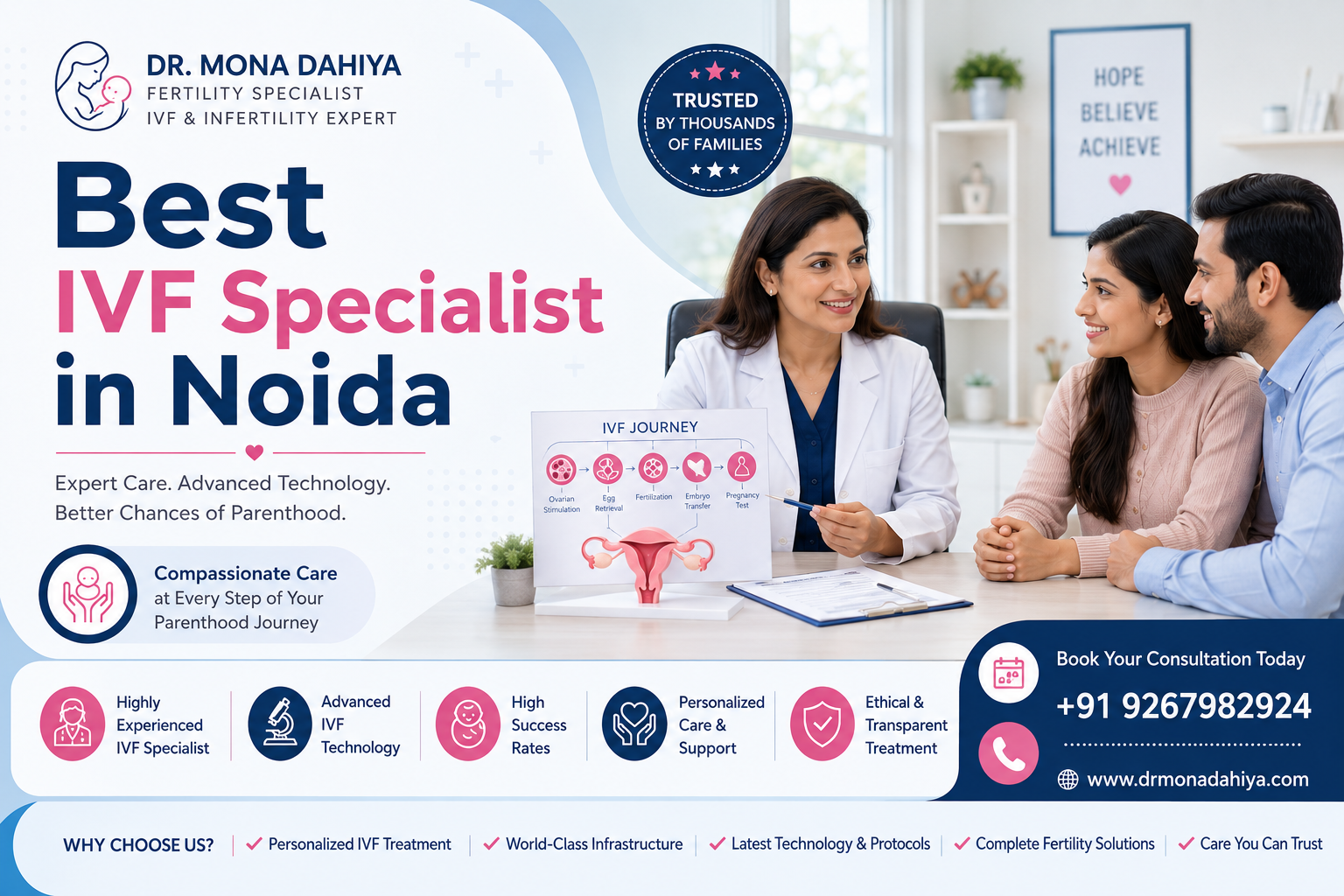
Starting a family is one of life’s most cherished dreams. However, for many couples, conceiving naturally may take longer than expected or require medical support. Thanks to significant advancements in reproductive medicine, In Vitro Fertilization (IVF) has helped millions of couples worldwide experience the joy of parenthood.
If you are searching for the best IVF specialist in Noida, choosing the right fertility expert is one of the most important decisions you will make. IVF treatment is more than a medical procedure—it is a journey that requires expertise, transparency, emotional support, and personalized care.
In this comprehensive guide, we’ll explain everything you need to know about selecting an IVF specialist, understanding fertility treatments, factors that influence success rates, and what to expect during your fertility journey.
Why Choosing the Right IVF Specialist Matters
Every couple’s fertility journey is unique. Factors such as age, medical history, hormonal balance, ovarian reserve, sperm quality, lifestyle, and previous pregnancies all play a role in determining the most suitable treatment approach.
An experienced IVF specialist helps by:
- Identifying the underlying cause of infertility
- Recommending the most appropriate treatment
- Creating an individualized fertility plan
- Using evidence-based treatment protocols
- Monitoring each stage of the IVF cycle carefully
- Providing emotional guidance throughout the process
A patient-focused approach not only improves treatment efficiency but also helps couples make informed decisions with confidence.
Understanding IVF Treatment
IVF, or In Vitro Fertilization, is an advanced fertility treatment in which an egg and sperm are fertilized outside the body in a specialized laboratory. The resulting embryo is then transferred into the uterus with the goal of achieving pregnancy.
IVF may be recommended for couples experiencing:
- Blocked or damaged fallopian tubes
- Ovulation disorders
- Endometriosis
- Male infertility factors
- Unexplained infertility
- Low ovarian reserve
- Previous unsuccessful fertility treatments
- Advanced maternal age
Modern IVF techniques continue to evolve, offering improved precision and better treatment outcomes for many patients.
Qualities of the Best IVF Specialist in Noida
Finding the right fertility specialist involves more than checking online reviews. Here are the most important qualities to consider:
1. Specialized Experience
Look for a fertility specialist with extensive experience in reproductive medicine and assisted reproductive technologies. Experience often translates into better clinical judgment, especially in complex fertility cases.
2. Personalized Treatment Plans
No two patients are alike.
The best IVF specialists evaluate:
- Medical history
- Hormonal profile
- Ultrasound findings
- Ovarian reserve
- Semen analysis
- Lifestyle factors
before designing a customized treatment protocol.
Avoid clinics that recommend identical treatment plans for every patient.
3. Comprehensive Fertility Evaluation
Successful IVF begins with accurate diagnosis.
A detailed fertility assessment may include:
For Women
- Hormonal evaluation
- AMH testing
- Ultrasound scan
- Ovulation assessment
- Fallopian tube evaluation
- Thyroid function tests
For Men
- Semen analysis
- Hormonal testing (when required)
- DNA fragmentation testing (in selected cases)
- Physical examination
Identifying the exact cause of infertility helps optimize treatment decisions.
4. Advanced IVF Technology
Modern fertility centers use advanced laboratory techniques to improve embryo development and treatment precision.
These may include:
- ICSI (Intracytoplasmic Sperm Injection)
- Blastocyst culture
- Time-lapse embryo monitoring
- Cryopreservation (egg, sperm, embryo freezing)
- Assisted hatching (when appropriate)
- Preimplantation genetic testing (in selected cases)
Access to advanced technology can support individualized treatment plans, depending on the patient’s clinical needs.
Signs You Should Consult an IVF Specialist
Many couples wait too long before seeking medical advice.
Consider consulting a fertility specialist if:
- You are under 35 and have been trying to conceive for over one year.
- You are over 35 and have been trying for six months.
- You have irregular menstrual cycles.
- You have experienced recurrent miscarriages.
- You have known PCOS or endometriosis.
- Your partner has abnormal semen analysis.
- You have undergone previous unsuccessful fertility treatments.
- You have undergone surgery involving the reproductive organs.
Early consultation often helps identify issues sooner and may expand available treatment options.
Questions to Ask During Your First Fertility Consultation
Being prepared can make your consultation more productive.
Consider asking:
- What tests will I need?
- What is the likely cause of infertility?
- Which treatment is most suitable for us?
- What are the expected timelines?
- Are there alternatives to IVF?
- How many monitoring visits are required?
- What lifestyle changes do you recommend?
- What support services are available during treatment?
A good fertility specialist will take the time to answer your questions clearly and honestly.
Common Fertility Treatments Before IVF
IVF is not always the first recommendation.
Depending on your diagnosis, your specialist may suggest:
| Treatment | Best For |
|---|---|
| Ovulation Induction | Irregular ovulation |
| Timed Intercourse | Mild fertility concerns |
| IUI (Intrauterine Insemination) | Mild male factor infertility or unexplained infertility |
| Fertility Preservation | Individuals planning future pregnancies |
| IVF | Moderate to complex infertility cases |
| ICSI | Significant male factor infertility |
Choosing the right treatment depends on a thorough evaluation and individualized medical advice.
Factors That Influence IVF Success
While IVF has helped many couples achieve pregnancy, success depends on several factors, including:
- Age of the female partner
- Egg quality
- Sperm quality
- Embryo quality
- Uterine health
- Lifestyle habits
- Underlying medical conditions
- Adherence to treatment protocols
It’s important to understand that no clinic or doctor can ethically guarantee pregnancy, as outcomes vary from person to person.
Why Experience Matters When Choosing an IVF Specialist
IVF is a highly specialized treatment that requires careful planning, precise laboratory processes, and continuous monitoring. An experienced fertility specialist understands that every patient’s fertility challenges are different and creates a treatment plan based on individual medical needs rather than following a standard approach.
A qualified IVF specialist focuses on:
- Comprehensive fertility evaluation
- Personalized treatment planning
- Transparent communication
- Ethical medical practices
- Continuous monitoring throughout the IVF cycle
- Emotional support for couples
Experience also helps in managing complex fertility cases, including repeated IVF failures, low ovarian reserve, endometriosis, PCOS, and male infertility.
Step-by-Step IVF Treatment Process
Understanding the IVF process can help reduce anxiety and prepare couples for the journey ahead.
Step 1: Initial Consultation
The first appointment includes a detailed discussion about:
- Medical history
- Previous pregnancies
- Lifestyle
- Menstrual history
- Existing medical conditions
- Previous fertility treatments
Your specialist may recommend diagnostic tests before designing your treatment plan.
Step 2: Fertility Assessment
Tests may include:
Female Fertility Tests
- AMH Test
- Hormonal Profile
- Ultrasound Scan
- Thyroid Function
- Vitamin D Levels
- Hysteroscopy (if required)
Male Fertility Tests
- Semen Analysis
- Hormonal Testing
- Infection Screening
- DNA Fragmentation Test (selected cases)
These investigations help identify the root cause of infertility.
Step 3: Ovarian Stimulation
Fertility medications stimulate the ovaries to produce multiple mature eggs instead of the single egg released during a natural menstrual cycle.
During this phase, the specialist monitors follicle growth using:
- Ultrasound scans
- Blood hormone tests
Medication doses may be adjusted based on individual response.
Step 4: Egg Retrieval
Once the eggs reach maturity, they are collected through a minimally invasive procedure performed under mild anesthesia.
The procedure usually takes around 20–30 minutes, and most patients return home the same day.
Step 5: Fertilization
The collected eggs are fertilized in a specialized IVF laboratory using either:
- Conventional IVF
- ICSI (Intracytoplasmic Sperm Injection)
The embryology team carefully monitors embryo development over the following days.
Step 6: Embryo Development
Healthy embryos are cultured for several days before the specialist determines the most suitable time for embryo transfer.
Embryo quality plays an important role in treatment planning.
Step 7: Embryo Transfer
The selected embryo is transferred into the uterus using a thin catheter.
The procedure is generally painless and does not require surgery.
Step 8: Pregnancy Test
Around 10–14 days after embryo transfer, a blood test is performed to determine whether implantation has occurred.
Lifestyle Habits That May Support Fertility
Although medical treatment is essential in many cases, healthy lifestyle habits may support overall reproductive health.
Eat a Balanced Diet
Include:
- Fresh fruits
- Green vegetables
- Whole grains
- Lean protein
- Healthy fats
- Nuts and seeds
A balanced diet helps maintain overall health during fertility treatment.
Maintain a Healthy Weight
Being significantly underweight or overweight may affect hormone balance and ovulation. A healthy Body Mass Index (BMI) can support reproductive health.
Exercise Regularly
Moderate physical activity can help improve:
- Blood circulation
- Stress management
- Weight control
- Overall wellness
Avoid excessive exercise unless advised by your doctor.
Avoid Smoking and Alcohol
Smoking and excessive alcohol consumption can negatively affect both egg and sperm quality. Avoiding these habits may improve overall reproductive health.
Manage Stress
The fertility journey can be emotionally challenging.
Stress management techniques include:
- Yoga
- Meditation
- Deep breathing exercises
- Walking
- Counseling
- Support groups
While reducing stress alone does not guarantee pregnancy, it can improve emotional well-being during treatment.
Common Myths About IVF
Myth 1: IVF Always Works on the First Attempt
Fact: Success depends on several medical factors, including age, embryo quality, and overall reproductive health. Some couples may require more than one treatment cycle.
Myth 2: IVF Is Only for Women
Fact: Male infertility contributes to many infertility cases. Both partners should undergo evaluation.
Myth 3: IVF Always Results in Twins
Fact: Modern IVF often involves transferring a single embryo when appropriate, reducing the likelihood of multiple pregnancies.
Myth 4: IVF Is Extremely Painful
Fact: Most IVF procedures involve only mild discomfort, and egg retrieval is typically performed under anesthesia.
Myth 5: Age Doesn’t Matter Because IVF Can Solve Everything
Fact: Female age remains one of the most significant factors influencing fertility and IVF outcomes.
Emotional Support During IVF
Fertility treatment is not only a physical journey but also an emotional one. Feelings of hope, uncertainty, and stress are common.
A compassionate IVF specialist understands these challenges and encourages open communication. Many fertility clinics also offer counseling or support resources to help couples navigate the process.
How to Compare IVF Clinics in Noida
When choosing an IVF clinic, consider the following factors rather than focusing on a single success-rate number:
| Factor | Why It Matters |
|---|---|
| Experienced fertility specialist | Guides personalized treatment decisions |
| Advanced embryology laboratory | Supports embryo development |
| Transparent communication | Helps patients make informed choices |
| Ethical treatment practices | Builds trust and confidence |
| Comprehensive fertility services | Allows continuity of care |
| Personalized treatment plans | Tailored to individual needs |
| Hygiene and safety standards | Essential for patient care |
Understanding IVF Costs
The cost of IVF treatment varies depending on factors such as:
- Diagnostic investigations
- Medications
- Laboratory procedures
- ICSI (if required)
- Embryo freezing
- Genetic testing (if recommended)
- Number of treatment cycles
Before starting treatment, discuss the expected costs and what is included in the treatment plan with your fertility clinic.
The Importance of Clear Communication
One hallmark of an experienced IVF specialist is clear and honest communication. Patients should feel comfortable asking questions and understand:
- Their diagnosis
- Recommended treatment options
- Potential benefits and risks
- Expected timelines
- Follow-up care
This collaborative approach helps couples make informed decisions throughout their fertility journey.
Why Personalized Fertility Care Makes a Difference
Every fertility journey is unique. While some couples may conceive with simple treatments, others may require advanced procedures such as IVF or ICSI. This is why personalized fertility care is essential.
An experienced IVF specialist carefully reviews your medical history, diagnostic reports, age, lifestyle, and fertility goals before recommending a treatment plan. Rather than following a one-size-fits-all approach, personalized care ensures that every decision is based on your specific needs.
Patients often value a fertility specialist who:
- Listens to their concerns with empathy.
- Explains each step of the treatment clearly.
- Recommends evidence-based treatment options.
- Maintains transparency about timelines, costs, and expected outcomes.
- Provides continuous guidance throughout the treatment journey.
This patient-centered approach helps build trust and supports informed decision-making.
Why Many Couples Seek Fertility Care in Noida
Noida has become a preferred destination for fertility treatment due to the availability of experienced specialists, modern reproductive technology, and comprehensive fertility services.
Many fertility centers in the region offer:
- Advanced IVF laboratories
- Fertility preservation options
- ICSI and blastocyst culture
- Comprehensive diagnostic facilities
- Personalized treatment plans
- Multidisciplinary care teams
The combination of skilled professionals and advanced technology allows patients to access quality fertility care close to home.
Tips to Prepare for Your First IVF Consultation
To make the most of your appointment:
- Carry all previous medical reports and prescriptions.
- Bring semen analysis reports (if available).
- Note your menstrual history and previous pregnancies.
- Prepare a list of questions for your doctor.
- Discuss any ongoing medications or health conditions honestly.
- Be open about your expectations and concerns.
A well-prepared consultation helps your fertility specialist understand your medical history and recommend the most appropriate next steps.
Frequently Asked Questions
1. When should I consult an IVF specialist?
If you are under 35 and have been trying to conceive for one year without success—or over 35 and trying for six months—it is advisable to consult a fertility specialist. Earlier evaluation may be recommended for women with irregular periods, endometriosis, PCOS, or known fertility concerns.
2. Is IVF the first treatment for infertility?
Not always. Depending on the diagnosis, your specialist may recommend lifestyle changes, ovulation induction, or intrauterine insemination (IUI) before considering IVF.
3. How long does one IVF cycle take?
A complete IVF cycle generally takes around 4–6 weeks, although the exact duration varies depending on the individual’s treatment protocol and response to medication.
4. Can lifestyle changes improve fertility?
Maintaining a healthy weight, eating a balanced diet, exercising regularly, avoiding smoking and excessive alcohol, and managing stress can support overall reproductive health. However, medical evaluation is important if conception is delayed.
5. Is IVF safe?
IVF is a well-established fertility treatment performed under medical supervision. As with any medical procedure, there are potential risks, which your fertility specialist will explain before treatment.
6. Does age affect IVF success?
Yes. Female age is one of the most important factors influencing egg quality and fertility potential. Consulting a specialist early can help determine the most appropriate treatment options.
Final Thoughts
Choosing the best IVF specialist in Noida is an important step toward achieving your dream of parenthood. Beyond medical expertise, look for a specialist who offers compassionate care, transparent communication, and personalized treatment based on your unique fertility needs.
Modern fertility treatments have given hope to countless couples, but every journey is different. A comprehensive evaluation, timely diagnosis, and evidence-based treatment plan can help you make informed decisions with confidence.
If you have been facing difficulties in conceiving or have questions about fertility treatment, seeking guidance from an experienced fertility specialist is the first step toward understanding your options and planning the path ahead.