

Introduction
If you’ve been dealing with irregular periods, unexplained bleeding, difficulty getting pregnant, or repeated miscarriages, you’re probably searching for answers—and the uncertainty can be overwhelming. The good news is that modern gynecological treatments have made it easier than ever to diagnose and treat many uterine conditions with minimally invasive procedures. One of the most effective options available today is hysteroscopy surgery.
If you’re considering Hysteroscopy Surgery in Delhi, this comprehensive guide will help you understand everything you need to know before making a decision. From learning how the procedure works to understanding its benefits, recovery process, risks, and expected costs, you’ll gain the knowledge you need to feel more confident about your treatment.
Delhi has become one of India’s leading destinations for advanced gynecological care. The city is home to experienced gynecologists, modern hospitals, and cutting-edge medical technology, making it an excellent place for hysteroscopy procedures.
Whether your doctor has already recommended hysteroscopy or you’re simply researching your symptoms, this guide is designed from your perspective—to answer your questions in simple language and help you make informed healthcare decisions.
What Is Hysteroscopy Surgery?
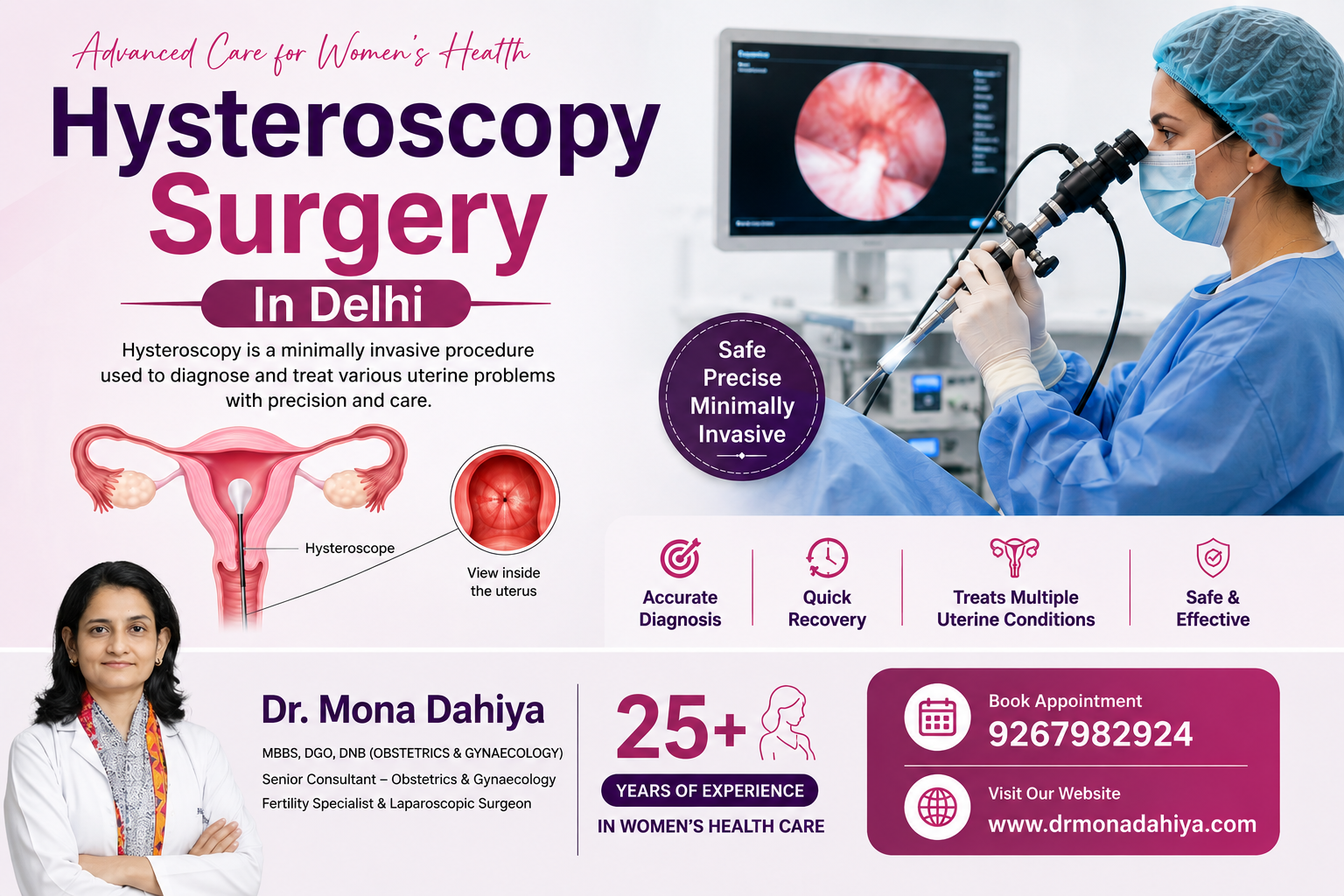
Hysteroscopy is a minimally invasive medical procedure that allows a gynecologist to examine the inside of your uterus without making any external cuts or large surgical incisions.
During the procedure, your doctor inserts a thin, flexible instrument called a hysteroscope through the vagina and cervix into the uterus. The hysteroscope contains a tiny camera and light source that displays clear images on a monitor, allowing your doctor to identify abnormalities and, if necessary, treat them immediately.
Unlike traditional surgery, hysteroscopy does not require opening the abdomen, which means:
- Smaller or no external scars
- Less pain after the procedure
- Faster recovery
- Lower risk of infection
- Shorter hospital stay
- Quicker return to daily life
Depending on your condition, hysteroscopy may be used for diagnosis, treatment, or both during the same procedure.
Why Might Your Doctor Recommend Hysteroscopy?
Your gynecologist may recommend hysteroscopy if other diagnostic tests, such as ultrasound, suggest abnormalities inside your uterus or if you’re experiencing symptoms that require a closer examination.
Some common reasons include:
1. Abnormal Uterine Bleeding
If you’re experiencing:
- Heavy menstrual bleeding
- Prolonged periods
- Bleeding between periods
- Bleeding after menopause
your doctor may recommend hysteroscopy to identify the underlying cause.
2. Difficulty Getting Pregnant
Many women struggle with infertility due to uterine abnormalities that cannot always be detected through routine scans.
Hysteroscopy helps identify issues such as:
- Uterine septum
- Polyps
- Fibroids
- Scar tissue
- Adhesions
Treating these conditions can improve your chances of conception.
3. Recurrent Miscarriages
Experiencing repeated pregnancy loss can be emotionally challenging.
Hysteroscopy allows your doctor to examine whether structural abnormalities inside the uterus are contributing to miscarriage and, in many cases, correct them during the same procedure.
4. Suspected Polyps or Fibroids
If imaging tests indicate the presence of growths inside the uterus, hysteroscopy enables precise diagnosis and minimally invasive removal.
5. Removal of Retained Tissue
Sometimes, tissue may remain inside the uterus after childbirth or miscarriage.
Hysteroscopy allows safe and accurate removal while preserving healthy uterine tissue.
6. Evaluation of Abnormal Ultrasound Findings
An ultrasound can sometimes detect irregularities but cannot always provide a complete diagnosis.
Hysteroscopy offers a direct view of the uterine cavity, helping your doctor make an accurate assessment.
Types of Hysteroscopy
Understanding the different types of hysteroscopy can help you know what to expect.
Diagnostic Hysteroscopy
This procedure is performed to identify problems inside the uterus.
It helps diagnose:
- Abnormal bleeding
- Infertility-related conditions
- Congenital uterine abnormalities
- Polyps
- Fibroids
- Scar tissue
The procedure usually takes between 10 and 30 minutes.
Operative Hysteroscopy
If your doctor identifies an abnormality, specialized surgical instruments can be passed through the hysteroscope to treat it during the same procedure.
Operative hysteroscopy may be used to:
- Remove uterine polyps
- Remove fibroids
- Cut uterine adhesions
- Correct uterine septum
- Remove retained tissue
- Retrieve displaced intrauterine devices (IUDs)
Combining diagnosis and treatment often eliminates the need for multiple surgeries.
Common Conditions Treated with Hysteroscopy Surgery
Hysteroscopy is one of the most versatile procedures in gynecology because it can diagnose and treat a wide range of uterine conditions.
Uterine Polyps
Polyps are soft tissue growths that develop inside the lining of the uterus.
Symptoms may include:
- Heavy periods
- Spotting between periods
- Infertility
- Bleeding after menopause
Removing polyps can improve both symptoms and fertility outcomes.
Uterine Fibroids
Fibroids are non-cancerous growths that develop within the uterus.
When fibroids extend into the uterine cavity, they may cause:
- Heavy bleeding
- Pelvic pain
- Infertility
- Recurrent miscarriage
Hysteroscopic removal preserves the uterus while relieving symptoms.
Uterine Septum
A uterine septum is a congenital condition in which a band of tissue divides the uterine cavity.
Women with this condition may experience:
- Infertility
- Recurrent miscarriages
- Pregnancy complications
Hysteroscopic septum removal significantly improves reproductive outcomes in many cases.
Intrauterine Adhesions (Asherman’s Syndrome)
Scar tissue inside the uterus may develop after previous surgeries, infections, or pregnancy-related procedures.
Symptoms include:
- Very light periods
- Absent menstruation
- Infertility
- Repeated miscarriages
Hysteroscopy allows precise removal of these adhesions while minimizing damage to healthy tissue.
Retained Products of Conception
Following childbirth or miscarriage, small amounts of tissue may remain inside the uterus.
Symptoms can include:
- Heavy bleeding
- Persistent pain
- Infection
- Fever
Hysteroscopy provides a safer alternative to blind procedures by allowing direct visualization during tissue removal.
Symptoms That Shouldn’t Be Ignored
While occasional menstrual irregularities can be normal, certain symptoms should prompt you to consult a gynecologist.
Seek medical evaluation if you experience:
- Heavy menstrual bleeding every month
- Bleeding after menopause
- Bleeding between periods
- Severe menstrual cramps
- Chronic pelvic pain
- Difficulty conceiving
- Two or more miscarriages
- Unusual vaginal discharge with bleeding
- Pain during intercourse
- Persistent lower abdominal discomfort
Early diagnosis often leads to simpler treatment and better outcomes.
Who Is a Good Candidate for Hysteroscopy Surgery?
You may be an ideal candidate if:
- You have unexplained abnormal uterine bleeding.
- Your ultrasound shows polyps or fibroids.
- You’re struggling with infertility.
- You’ve experienced recurrent pregnancy loss.
- Your doctor suspects uterine adhesions.
- You need removal of retained pregnancy tissue.
- An IUD has become displaced.
- Further investigation of the uterine cavity is required.
However, hysteroscopy may not be recommended if you have an active pelvic infection, are pregnant (unless in very specific medical situations), or have certain health conditions that require alternative treatment. Your gynecologist will review your medical history and recommend the safest approach for you.
By understanding why hysteroscopy is performed and the conditions it can treat, you’re already taking an important step toward making informed decisions about your reproductive health. In the next section, you’ll learn how to prepare for the procedure, what happens on the day of surgery, and exactly what you can expect during every stage of the treatment process.
Hysteroscopy Surgery in Delhi: Preparation, Procedure & Recovery
How to Prepare for Hysteroscopy Surgery
Once your gynecologist recommends hysteroscopy surgery, it’s natural to have questions about how to prepare. The good news is that this minimally invasive procedure usually requires only a few simple preparations.
Following your doctor’s instructions carefully can help ensure a smooth procedure and faster recovery.
Medical Evaluation Before Surgery
Before scheduling your hysteroscopy, your doctor may recommend a few routine tests, such as:
- Blood tests
- Pregnancy test (if applicable)
- Urine examination
- Pelvic ultrasound
- ECG (for some patients)
- Other investigations based on your medical history
These tests help determine whether you’re fit for the procedure and identify any underlying health concerns.
Share Your Medical History
Make sure your doctor knows if you:
- Have diabetes
- Have high blood pressure
- Take blood-thinning medications
- Have allergies to medicines
- Have heart disease
- Have asthma
- Have had previous uterine surgeries
- Are planning a pregnancy
- Are currently breastfeeding
Providing accurate information allows your healthcare team to plan the safest treatment.
Medication Instructions
Your doctor may advise you to:
- Stop certain blood-thinning medicines temporarily.
- Continue essential medications with a small sip of water.
- Avoid certain supplements before surgery.
- Follow fasting instructions if anesthesia is planned.
Never stop prescribed medications without consulting your doctor.
Fasting Before Surgery
If general anesthesia or sedation is required, you may be asked to avoid eating or drinking for 6 to 8 hours before the procedure.
If your hysteroscopy is being performed with local anesthesia, fasting instructions may differ.
Always follow the guidance provided by your healthcare team.
What to Bring on the Day of Surgery
To make your hospital visit stress-free, carry:
- Identity proof
- Medical records
- Previous ultrasound reports
- Blood test reports
- Health insurance documents (if applicable)
- Comfortable clothing
- List of current medications
It’s also a good idea to have a family member or friend accompany you, especially if you’re receiving sedation or general anesthesia.
What Happens During Hysteroscopy Surgery?
Knowing what happens during the procedure can help reduce anxiety.
Although the exact steps vary depending on your condition, most hysteroscopy procedures follow a similar process.
Step 1: Admission
After arriving at the hospital:
- Your vital signs are checked.
- Consent forms are completed.
- An intravenous (IV) line may be inserted.
- You’ll change into a hospital gown.
The nursing staff will answer any last-minute questions before the procedure begins.
Step 2: Anesthesia
The type of anesthesia depends on the complexity of your procedure.
Your doctor may recommend:
Local Anesthesia
Only the cervix is numbed.
This is commonly used for simple diagnostic hysteroscopy.
Sedation
You’ll feel relaxed and sleepy while remaining partially conscious.
Many patients have little or no memory of the procedure.
General Anesthesia
You’ll be completely asleep throughout the surgery.
This is usually recommended for operative hysteroscopy involving fibroid or polyp removal.
Step 3: Cervical Access
The doctor gently inserts the hysteroscope through the vagina and cervix into the uterus.
Since no abdominal incision is required, there are no external scars.
Step 4: Uterine Expansion
A sterile fluid or gas is introduced into the uterus.
This gently expands the uterine cavity, allowing the doctor to clearly examine its inner lining.
Step 5: Examination
The tiny camera transmits high-definition images to a monitor.
Your gynecologist carefully examines:
- Uterine lining
- Fallopian tube openings
- Presence of polyps
- Fibroids
- Adhesions
- Septum
- Any abnormal tissue
Step 6: Treatment (If Required)
If abnormalities are detected, miniature surgical instruments can be passed through the hysteroscope to:
- Remove polyps
- Remove fibroids
- Cut scar tissue
- Correct uterine abnormalities
- Remove retained tissue
- Retrieve misplaced IUDs
This “see and treat” approach often avoids the need for a second surgery.
Step 7: Completion
After the examination and treatment:
- The hysteroscope is removed.
- You’ll be shifted to the recovery area.
- Medical staff will monitor your condition before discharge.
Most patients go home the same day.
How Long Does the Procedure Take?
The duration depends on whether the procedure is diagnostic or operative.
Typically:
- Diagnostic hysteroscopy: 10–30 minutes
- Operative hysteroscopy: 30–90 minutes
Including preparation and recovery, you may spend a few hours at the hospital.
Is Hysteroscopy Painful?
This is one of the most common concerns among patients.
Most women experience only mild discomfort during diagnostic hysteroscopy, especially when local anesthesia is used.
After the procedure, you may notice:
- Mild cramping (similar to menstrual cramps)
- Light spotting
- Slight pelvic discomfort
These symptoms usually improve within a day or two and can often be managed with prescribed pain medication.
Recovery After Hysteroscopy Surgery
One of the biggest advantages of hysteroscopy is its quick recovery time.
Because there are no major incisions, healing is generally faster than with traditional surgery.
Immediately After Surgery
In the recovery room, your healthcare team will monitor:
- Blood pressure
- Heart rate
- Oxygen levels
- Pain
- Bleeding
Once you’re stable and comfortable, you’ll usually be discharged the same day.
What Is Normal After Surgery?
It’s common to experience:
- Mild vaginal bleeding
- Light spotting
- Mild cramping
- Temporary fatigue
- Slight watery discharge
These symptoms often resolve within a few days.
Recovery Timeline
First 24 Hours
You may feel sleepy if anesthesia was used.
Rest, stay hydrated, and avoid strenuous activities.
Days 2–3
Most women feel significantly better.
Light household work may be resumed if your doctor approves.
Within One Week
Many patients return to office work and normal daily activities.
Recovery may take longer if a complex operative procedure was performed.
Two to Four Weeks
Your uterus continues healing internally.
Your doctor may schedule a follow-up visit to assess recovery.
Do’s After Hysteroscopy Surgery
Following these recommendations can support a smooth recovery:
- Get adequate rest.
- Drink plenty of fluids.
- Eat a balanced, nutritious diet.
- Take medications exactly as prescribed.
- Attend follow-up appointments.
- Report unusual symptoms promptly.
- Maintain good personal hygiene.
Don’ts After Hysteroscopy Surgery
For the period advised by your doctor, avoid:
- Heavy lifting
- Intense exercise
- Swimming
- Using tampons
- Sexual intercourse
- Douching
- Ignoring heavy bleeding or fever
These precautions help reduce the risk of infection and support proper healing.
When Should You Contact Your Doctor?
While complications are uncommon, seek immediate medical attention if you experience:
- Heavy vaginal bleeding
- Severe abdominal pain
- Fever above 100.4°F (38°C)
- Foul-smelling vaginal discharge
- Difficulty passing urine
- Persistent vomiting
- Severe dizziness or fainting
Prompt medical care can prevent minor issues from becoming more serious.
Emotional Recovery Matters Too
If you’re undergoing hysteroscopy as part of infertility treatment or after experiencing recurrent miscarriages, recovery isn’t just physical—it can also be emotional.
Give yourself time to heal, ask questions during follow-up appointments, and don’t hesitate to seek support from loved ones or a counselor if you’re feeling anxious or overwhelmed. Understanding your diagnosis and treatment plan can provide reassurance and help you move forward with greater confidence.
By preparing well and knowing what to expect before, during, and after the procedure, you’ll be better equipped to navigate your treatment journey. In the next section, we’ll explore the benefits of hysteroscopy, possible risks and complications, the cost of hysteroscopy surgery in Delhi, tips for choosing the right gynecologist, and answers to frequently asked questions.
Benefits, Risks, Cost of Hysteroscopy Surgery in Delhi & FAQs
Benefits of Hysteroscopy Surgery
Hysteroscopy has become one of the most preferred gynecological procedures because it offers both accurate diagnosis and effective treatment with minimal discomfort. Compared to traditional surgical methods, it provides several advantages that contribute to a better patient experience and faster recovery.
1. Minimally Invasive Procedure
One of the biggest advantages of hysteroscopy is that it does not require large surgical cuts. The hysteroscope is inserted through the natural opening of the cervix, eliminating the need for abdominal incisions.
2. Faster Recovery
Most women can return home on the same day and resume their normal routine within a few days, depending on the type of procedure performed.
3. Less Pain and Discomfort
Because there are no major incisions, post-operative pain is usually mild and can often be managed with prescribed medication.
4. Accurate Diagnosis
The high-definition camera attached to the hysteroscope allows your gynecologist to directly examine the uterine cavity, leading to more accurate diagnosis than imaging tests alone.
5. Diagnosis and Treatment in One Procedure
In many cases, your doctor can identify and treat problems during the same procedure, reducing the need for multiple hospital visits or additional surgeries.
6. Minimal Blood Loss
Hysteroscopy is associated with less bleeding compared to traditional open surgical procedures.
7. Improved Fertility Outcomes
For women experiencing infertility due to uterine polyps, fibroids, adhesions, or a uterine septum, hysteroscopic treatment may improve the chances of a successful pregnancy.
8. Lower Risk of Infection
Since there are no external incisions, the risk of infection is generally lower when compared with open surgery.
9. Short Hospital Stay
Most patients are discharged within a few hours, making hysteroscopy a convenient option for women with busy schedules.
10. Better Quality of Life
Treating the underlying cause of abnormal bleeding or pelvic discomfort can significantly improve your daily comfort, confidence, and overall well-being.
Are There Any Risks?
Like any medical procedure, hysteroscopy carries some risks. However, serious complications are uncommon, especially when the procedure is performed by an experienced gynecologist.
Possible risks include:
- Infection
- Heavy bleeding
- Injury to the uterus or cervix
- Reaction to anesthesia
- Fluid overload (rare)
- Pelvic pain
- Temporary cramping
- Uterine perforation (rare)
Your doctor will discuss these risks with you before the procedure and explain the precautions taken to minimize them.
What Is the Cost of Hysteroscopy Surgery in Delhi?
One of the most common questions patients ask is about the cost of hysteroscopy surgery.
The total cost depends on several factors, including:
- Type of hysteroscopy (diagnostic or operative)
- Hospital or clinic
- Experience of the gynecologist
- Type of anesthesia used
- Medical tests required
- Complexity of the procedure
- Hospital stay (if needed)
- Insurance coverage
Estimated Cost Range
Simple diagnostic hysteroscopy is usually less expensive, while operative procedures involving the removal of fibroids, polyps, or adhesions may cost more due to additional surgical time and equipment.
For an accurate estimate, consult your gynecologist and request a detailed cost breakdown that includes consultation, investigations, procedure charges, anesthesia, medicines, and follow-up care.
How to Choose the Best Hospital for Hysteroscopy Surgery in Delhi
Selecting the right hospital and specialist is an important step in ensuring a safe and successful outcome.
When comparing hospitals, consider the following:
Experienced Gynecologists
Choose a specialist with extensive experience in performing hysteroscopy procedures, especially if your condition requires operative treatment.
Advanced Medical Equipment
Modern hysteroscopy systems provide better visualization and may improve the precision of diagnosis and treatment.
Comprehensive Women’s Healthcare
Hospitals that offer imaging, laboratory services, fertility support, and post-operative care under one roof can make your treatment journey more convenient.
Transparent Pricing
Ask for a detailed estimate to understand what is included in the package and avoid unexpected expenses.
Patient Reviews
Reading genuine patient experiences can provide insights into the quality of care, communication, and overall satisfaction.
Hygiene and Safety Standards
A clean environment and strict infection-control practices are essential for patient safety.
Frequently Asked Questions (FAQs)
1. Is hysteroscopy a major surgery?
No. Hysteroscopy is considered a minimally invasive procedure and usually does not involve large incisions or a prolonged hospital stay.
2. How long does recovery take?
Most women recover within a few days. Full internal healing may take a few weeks, depending on the complexity of the procedure.
3. Will I need to stay overnight in the hospital?
In most cases, hysteroscopy is performed as a day-care procedure, allowing patients to return home the same day.
4. Is hysteroscopy painful?
You may experience mild cramping during or after the procedure. Anesthesia or sedation is often used to keep you comfortable.
5. Can hysteroscopy improve fertility?
Yes. Removing uterine polyps, fibroids, scar tissue, or correcting structural abnormalities may improve fertility in selected patients.
6. When can I return to work?
Many women return to work within one to three days after a diagnostic hysteroscopy. Recovery after operative hysteroscopy may take slightly longer.
7. Will there be any stitches?
No. Since the procedure is performed through the cervix, no external stitches are required.
8. Can I eat normally after surgery?
Your doctor will advise you when to resume eating. Most patients can return to a normal diet shortly after the effects of anesthesia wear off.
9. Is hysteroscopy safe?
Yes. When performed by an experienced gynecologist, hysteroscopy is generally considered a safe and effective procedure.
10. When should I plan pregnancy after hysteroscopy?
The appropriate timing depends on your condition and the treatment performed. Always follow your gynecologist’s advice before trying to conceive.
11. Can hysteroscopy detect uterine cancer?
Hysteroscopy allows the doctor to examine the uterine cavity and obtain tissue samples if needed. A biopsy may help diagnose abnormal or cancerous changes.
12. Will I have bleeding after the procedure?
Light spotting or mild bleeding for a few days is common and usually not a cause for concern. However, heavy bleeding should be reported to your doctor immediately.
Final Thoughts
If you’re experiencing abnormal uterine bleeding, infertility, recurrent miscarriages, or persistent pelvic discomfort, hysteroscopy can provide valuable answers and, in many cases, immediate treatment. Its minimally invasive nature, quick recovery, and high diagnostic accuracy have made it one of the most trusted procedures in modern gynecology.
Choosing the right hospital and an experienced gynecologist in Delhi can make a significant difference in your treatment journey. Don’t ignore ongoing symptoms or delay seeking medical advice. Early diagnosis often leads to simpler treatment, faster recovery, and better long-term outcomes.
Remember, every woman’s health needs are unique. A consultation with a qualified gynecologist is the best way to determine whether hysteroscopy is the right option for you.
Take the Next Step Toward Better Women’s Health
If you’re considering Hysteroscopy Surgery in Delhi, schedule a consultation with an experienced gynecologist to discuss your symptoms, understand your treatment options, and receive a personalized care plan. Timely medical attention can help you regain your health, improve your quality of life, and move forward with confidence.