

Parenthood is one of the most cherished milestones in life, but for many couples, the journey is not always easy. Infertility affects millions of people worldwide, creating emotional, physical, and financial challenges. Fortunately, advances in reproductive medicine have transformed fertility treatment, making it possible for many couples to experience the joy of having a child. Among these advancements, In Vitro Fertilization (IVF) has emerged as one of the most effective and successful fertility treatments.
However, the success of IVF depends not only on advanced technology but also on the expertise of the fertility specialist guiding the treatment. Choosing an experienced gynecologist with a patient-centered approach can significantly influence the overall experience and treatment outcomes.
If you are searching for the Best Gynecologist for IVF in Noida, Dr. Mona Dahiya is a highly regarded fertility specialist known for her compassionate care, individualized treatment plans, and extensive experience in reproductive medicine. With more than 25 years of experience, she has helped numerous couples take confident steps toward achieving their dream of parenthood.
This guide explains infertility, IVF treatment, and why selecting the right fertility expert is one of the most important decisions in your reproductive journey.
Understanding Infertility
Infertility is generally defined as the inability to conceive after one year of regular, unprotected intercourse. For women aged 35 years or older, medical evaluation is often recommended after six months of trying to conceive.
Infertility is more common than many people realize. It can affect individuals regardless of age, lifestyle, or overall health. Importantly, infertility is a medical condition—not a reflection of personal failure—and many causes are treatable with appropriate medical care.
Both men and women can contribute to fertility challenges, which is why evaluating both partners is an essential part of fertility care.
Common Causes of Female Infertility
Several medical conditions can affect a woman’s ability to conceive. Some of the most common include:
Polycystic Ovary Syndrome (PCOS)
PCOS is one of the leading causes of infertility. Women with PCOS often experience irregular ovulation, hormonal imbalance, weight changes, and irregular menstrual cycles. Early diagnosis and appropriate treatment can improve fertility outcomes.
Endometriosis
Endometriosis occurs when tissue similar to the uterine lining grows outside the uterus. This condition may affect the ovaries, fallopian tubes, and surrounding pelvic structures, potentially making conception more difficult.
Blocked Fallopian Tubes
Healthy fallopian tubes are necessary for fertilization because they allow eggs and sperm to meet. Damage or blockage caused by infections, surgery, or previous medical conditions can prevent natural conception.
Ovulation Disorders
Regular ovulation is essential for pregnancy. Hormonal imbalances, thyroid disorders, stress, or other medical conditions can interfere with ovulation.
Age-Related Fertility Decline
Female fertility naturally decreases with age, particularly after the age of 35. Egg quantity and quality gradually decline, making conception more challenging.
Uterine Abnormalities
Fibroids, uterine polyps, congenital abnormalities, or scar tissue may interfere with embryo implantation or pregnancy.
Common Causes of Male Infertility
Male infertility contributes to approximately half of all infertility cases.
Common causes include:
- Low sperm count
- Poor sperm motility
- Abnormal sperm morphology
- Hormonal disorders
- Varicocele
- Lifestyle factors such as smoking or excessive alcohol consumption
- Previous infections
Modern fertility treatments, including IVF with ICSI, can successfully address many male infertility issues.
Unexplained Infertility
Sometimes, standard fertility tests do not identify a specific cause despite thorough evaluation. This condition is called unexplained infertility.
Although the exact reason remains unknown, couples with unexplained infertility may still benefit significantly from treatments like IVF.
Emotional Impact of Infertility
Infertility is not only a physical condition—it often affects emotional well-being as well.
Many couples experience:
- Anxiety
- Depression
- Stress
- Feelings of isolation
- Relationship strain
- Loss of confidence
The emotional journey can be as challenging as the medical treatment itself.
This is why compassionate fertility specialists focus not only on clinical care but also on emotional support, counseling, and open communication throughout treatment.
Why Early Fertility Evaluation Matters
Many couples delay consulting a fertility specialist, hoping pregnancy will occur naturally with time.
However, early diagnosis often leads to:
- Better treatment options
- More personalized fertility planning
- Higher success rates
- Reduced emotional stress
- Better reproductive outcomes
Seeking medical advice early allows fertility specialists to identify potential problems before they become more complicated.
What is IVF?
In Vitro Fertilization (IVF) is one of the most advanced assisted reproductive technologies available today.
Instead of fertilization occurring naturally inside the body, IVF involves combining eggs and sperm inside a specialized embryology laboratory.
After fertilization, the healthiest embryo is selected and transferred into the uterus.
Over the last four decades, IVF has helped millions of families worldwide achieve successful pregnancies.
When is IVF Recommended?
IVF may be recommended in several situations, including:
- Blocked fallopian tubes
- Severe male infertility
- Endometriosis
- PCOS
- Repeated IUI failure
- Low ovarian reserve
- Unexplained infertility
- Advanced maternal age
- Genetic screening requirements
Your fertility specialist determines whether IVF is the most appropriate treatment after a detailed evaluation.
Benefits of IVF Treatment
IVF offers several important advantages.
Higher Chances of Pregnancy
Compared with many other fertility treatments, IVF generally provides higher pregnancy rates for appropriately selected patients.
Effective for Multiple Fertility Problems
IVF can help couples dealing with both male and female infertility.
Advanced Embryo Selection
Modern laboratories allow specialists to identify healthy embryos before transfer.
Fertility Preservation
Egg and embryo freezing allow patients to preserve fertility for future family planning.
Hope After Previous Treatment Failure
Many couples achieve successful pregnancies with IVF even after unsuccessful fertility treatments.
Why Choosing the Right IVF Specialist Matters
IVF involves much more than laboratory procedures.
A successful fertility journey requires:
- Accurate diagnosis
- Individualized treatment
- Careful monitoring
- Modern laboratory support
- Emotional guidance
- Honest communication
Choosing an experienced fertility specialist ensures that every aspect of treatment is carefully managed.
A knowledgeable gynecologist can identify potential challenges early, adjust treatment protocols when necessary, and provide reassurance throughout the process.
Why Many Couples Choose Dr. Mona Dahiya
Couples looking for the Best Gynecologist for IVF in Noida often seek a specialist who combines medical expertise with compassionate care.
Dr. Mona Dahiya focuses on:
- Personalized fertility treatment
- Ethical medical practices
- Advanced reproductive technology
- Patient education
- Transparent communication
- Continuous support
Rather than following identical treatment protocols for every patient, she carefully develops customized fertility plans based on each individual’s medical condition and reproductive goals.
This patient-centered philosophy has earned the trust of many families across Noida and Delhi NCR.
Looking Ahead
Understanding infertility is the first step toward successful fertility treatment. Modern medicine has created remarkable opportunities for couples who once believed parenthood was impossible.
The next step is selecting an experienced fertility specialist who can guide you with expertise, compassion, and personalized care.
Meet Dr. Mona Dahiya
Choosing the right fertility specialist is one of the most important decisions for couples planning IVF treatment. Medical expertise, experience, compassionate care, and access to advanced reproductive technology all play a vital role in improving treatment outcomes.
Dr. Mona Dahiya is one of the trusted names in gynecology and fertility care in Noida. With over 25 years of experience, she has dedicated her career to helping couples overcome infertility through personalized treatment plans and evidence-based medical practices.
Her philosophy is simple—every patient deserves individualized care, honest guidance, and complete support throughout their fertility journey.
Instead of recommending identical treatment protocols for everyone, she carefully studies each patient’s medical history, fertility investigations, age, hormonal profile, and reproductive goals before creating a customized treatment plan.
This personalized approach has helped many couples move closer to their dream of becoming parents.
Why Personalized Fertility Care Matters
Infertility is never the same for two couples.
While one couple may require simple ovulation induction, another may benefit from IVF or ICSI. Some patients may require surgical correction before fertility treatment, while others need hormonal management.
Personalized fertility care ensures that treatment is based on individual needs rather than generalized protocols.
This approach offers several benefits:
- Better treatment planning
- Reduced unnecessary procedures
- Improved patient comfort
- More efficient use of fertility treatments
- Higher confidence throughout the journey
Dr. Mona Dahiya believes every fertility journey deserves careful planning and compassionate attention.
Fertility Treatments Offered
Modern fertility care involves much more than IVF alone.
Dr. Mona Dahiya offers comprehensive reproductive healthcare under one roof.
IVF (In Vitro Fertilization)
IVF remains one of the most successful fertility treatments available today.
During IVF:
- Eggs are collected from the ovaries.
- Fertilization takes place in a specialized laboratory.
- Healthy embryos are developed.
- The best embryo is transferred into the uterus.
This treatment is recommended for various fertility conditions affecting both men and women.
IUI (Intrauterine Insemination)
IUI is often considered before IVF in selected patients.
During this procedure, processed sperm is placed directly inside the uterus during ovulation, increasing the chances of fertilization.
ICSI (Intracytoplasmic Sperm Injection)
ICSI is an advanced laboratory procedure commonly used when male infertility is present.
A single healthy sperm is carefully injected into a mature egg to facilitate fertilization.
This technique has significantly improved outcomes for couples with severe male infertility.
Fertility Evaluation
Successful treatment begins with an accurate diagnosis.
Comprehensive fertility evaluation may include:
- Hormonal testing
- Ultrasound examination
- Ovarian reserve assessment
- Semen analysis
- Tubal patency evaluation
- Lifestyle assessment
Understanding the underlying cause allows the fertility specialist to recommend the most suitable treatment.
Fertility Preservation
Some individuals wish to preserve fertility before cancer treatment, delayed parenthood, or certain medical conditions.
Available options include:
- Egg freezing
- Embryo freezing
These techniques provide greater flexibility for future family planning.
Management of Female Infertility
Female infertility treatment may include:
- Ovulation induction
- PCOS management
- Endometriosis treatment
- Hormonal therapy
- Surgical correction where appropriate
- IVF when indicated
Treatment recommendations depend entirely on the patient’s condition.
Male Infertility Treatment
Male fertility evaluation is equally important.
Treatment options vary depending on the underlying cause and may include:
- Lifestyle modifications
- Medical therapy
- Surgical referral (when appropriate)
- ICSI as part of IVF treatment
Evaluating both partners helps create the most effective treatment strategy.
Advanced Technology in IVF
Medical expertise alone is not enough.
Modern IVF success also depends upon advanced laboratory facilities.
Technology now allows fertility specialists to improve embryo development and optimize treatment protocols.
Some advanced techniques include:
High-Quality Embryology Laboratory
Embryos develop in carefully controlled laboratory conditions designed to support healthy growth.
Blastocyst Culture
Instead of transferring embryos at an earlier stage, blastocyst culture allows embryos to develop further before transfer when appropriate.
This may assist in selecting embryos with better developmental potential.
Cryopreservation
Modern freezing techniques allow safe preservation of:
- Eggs
- Embryos
This provides additional flexibility during fertility treatment.
Advanced Embryo Monitoring
Specialized laboratory systems help embryologists monitor embryo development while minimizing disturbance.
Individualized Stimulation Protocols
Every patient’s ovaries respond differently to fertility medications.
Treatment protocols are adjusted according to:
- Age
- Hormone levels
- Ovarian reserve
- Previous IVF response
This individualized approach improves patient safety and treatment efficiency.
Step-by-Step IVF Process
Understanding IVF helps reduce anxiety before beginning treatment.
Step 1 – Initial Consultation
The fertility journey begins with a detailed consultation.
This includes:
- Medical history
- Menstrual history
- Previous pregnancies
- Previous fertility treatments
- Lifestyle discussion
- Physical examination
The goal is to understand every factor that could influence fertility.
Step 2 – Fertility Investigations
Tests may include:
- Blood investigations
- Hormone profile
- Ultrasound
- Semen analysis
- Additional fertility assessments if required
Results help create an individualized treatment plan.
Step 3 – Ovarian Stimulation
Special medications stimulate the ovaries to produce multiple mature eggs.
Regular ultrasound scans and blood tests monitor follicle development.
Monitoring allows medication doses to be adjusted when necessary.
Step 4 – Egg Retrieval
Once the follicles are ready, mature eggs are collected using a minimally invasive procedure performed under sedation.
The procedure generally takes only a short time.
Step 5 – Fertilization
Collected eggs are fertilized using:
- Conventional IVF
or - ICSI (when indicated)
Embryologists carefully monitor embryo development over several days.
Step 6 – Embryo Transfer
The healthiest embryo is selected for transfer into the uterus.
This procedure is usually simple and does not require surgery.
Step 7 – Pregnancy Test
Approximately two weeks later, a blood test determines whether implantation has occurred.
If pregnancy is confirmed, regular follow-up care continues.
Emotional Support Throughout IVF
IVF is not only a medical journey—it is also an emotional one.
Many couples experience:
- Hope
- Anxiety
- Excitement
- Stress
- Fear of failure
Dr. Mona Dahiya believes emotional well-being is an important part of fertility care.
Patients are encouraged to:
- Ask questions freely
- Understand every treatment step
- Participate in decision-making
- Maintain realistic expectations
- Seek emotional support when needed
A supportive doctor-patient relationship often makes the treatment experience more comfortable.
A Patient-Centered Philosophy
One of the qualities that distinguishes experienced fertility specialists is their ability to combine medical excellence with compassion.
Dr. Mona Dahiya focuses on:
- Transparent communication
- Ethical recommendations
- Individualized treatment
- Respect for patient preferences
- Long-term reproductive health
Her goal extends beyond achieving pregnancy—she aims to provide a positive and supportive fertility experience for every couple.
Factors That Influence IVF Success
One of the most common questions couples ask is, “What are the chances of IVF success?” While IVF has helped millions of families worldwide, success depends on several medical and lifestyle factors. Understanding these factors allows patients to make informed decisions and actively participate in their fertility journey.
Dr. Mona Dahiya believes that every IVF treatment should be based on a thorough evaluation rather than assumptions. By identifying factors that influence fertility, she creates treatment plans tailored to each couple’s unique situation.
1. Age of the Woman
Age is one of the most important factors affecting fertility. As women grow older, both the quantity and quality of eggs gradually decline.
Generally:
- Women under 35 often have a higher chance of conception.
- Fertility naturally decreases after 35.
- After 40, pregnancy may become more challenging because ovarian reserve declines.
This doesn’t mean pregnancy isn’t possible after 35 or 40—it simply highlights the importance of early consultation and personalized treatment planning.
2. Ovarian Reserve
Ovarian reserve refers to the number of eggs remaining in the ovaries.
Doctors evaluate ovarian reserve using:
- AMH (Anti-Müllerian Hormone)
- Antral Follicle Count (AFC)
- Hormonal tests
- Ultrasound examination
These assessments help determine the most appropriate IVF protocol for each patient.
3. Sperm Health
Successful fertilization depends on healthy sperm as well as healthy eggs.
Male fertility evaluation usually includes:
- Sperm count
- Motility (movement)
- Morphology (shape)
- DNA quality (when indicated)
If significant male infertility is identified, advanced techniques such as ICSI may be recommended.
4. Lifestyle Choices
Lifestyle habits play an important role in reproductive health.
Healthy habits may positively influence fertility, including:
- Eating nutritious meals
- Maintaining a healthy weight
- Regular physical activity
- Adequate sleep
- Stress management
- Avoiding tobacco and excessive alcohol
Although lifestyle changes cannot treat every infertility condition, they can support overall reproductive health.
5. Medical Conditions
Certain medical conditions can affect fertility, such as:
- PCOS
- Endometriosis
- Thyroid disorders
- Diabetes
- Autoimmune disorders
- Hormonal imbalances
Managing these conditions before or during fertility treatment may improve overall reproductive health.
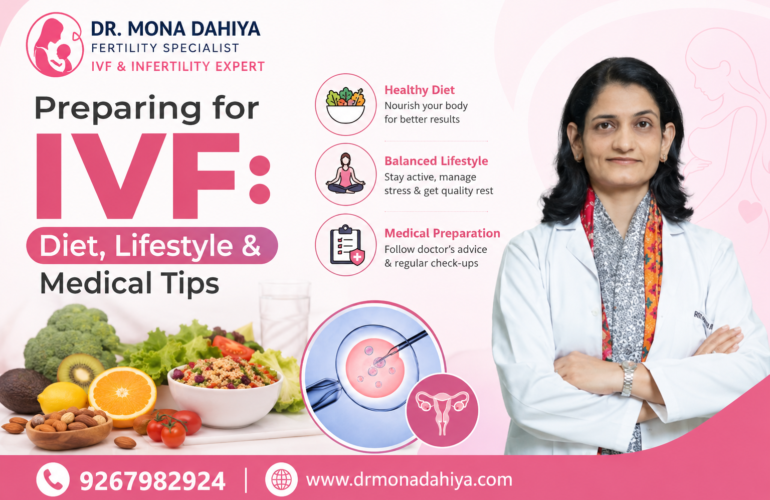
Preparing for IVF Treatment
Good preparation helps patients feel confident and organized before beginning IVF.
Preparation typically includes:
Complete Medical Evaluation
A comprehensive assessment helps identify any underlying fertility concerns.
Following Medication Instructions
Fertility medications should always be taken exactly as prescribed.
Maintaining Healthy Nutrition
Balanced nutrition supports overall health throughout treatment.
Regular Follow-Up
Attending scheduled appointments allows the medical team to monitor progress and adjust treatment if necessary.
Nutrition During Fertility Treatment
A healthy diet supports overall well-being and may help prepare the body for pregnancy.
Many fertility specialists recommend including:
Fresh Fruits
Rich in vitamins, minerals, and antioxidants.
Green Leafy Vegetables
Excellent sources of folate, iron, and fiber.
Whole Grains
Provide long-lasting energy and essential nutrients.
Lean Protein
Examples include:
- Lentils
- Beans
- Fish
- Eggs
- Chicken
Protein supports healthy body function during treatment.
Healthy Fats
Foods such as:
- Nuts
- Seeds
- Avocados
- Olive oil
provide beneficial fats that support overall health.
Adequate Hydration
Drinking enough water helps maintain general health throughout treatment.
Lifestyle Tips Before IVF
Small lifestyle improvements often make patients feel healthier and more prepared.
Maintain a Healthy Weight
Both underweight and overweight individuals may experience hormonal changes that affect fertility.
Exercise in Moderation
Walking, yoga, and light exercise are generally beneficial for overall health.
Very intense exercise may not be appropriate for everyone during fertility treatment, so patients should follow their doctor’s recommendations.
Quit Smoking
Smoking has been associated with reduced fertility in both men and women.
Limit Alcohol
Many fertility specialists advise minimizing or avoiding alcohol while trying to conceive.
Prioritize Sleep
Quality sleep supports hormonal balance and overall health.
Managing Stress During IVF
Fertility treatment can bring emotional highs and lows. Feeling anxious or uncertain is completely understandable.
Helpful ways to manage stress include:
- Meditation
- Deep breathing exercises
- Gentle yoga
- Spending time with family
- Talking with supportive friends
- Reading
- Listening to calming music
- Professional counseling when needed
Remember that emotional well-being is an important part of the fertility journey.
Common Myths About IVF
There are many misconceptions about IVF. Understanding the facts can help couples make informed decisions.
Myth 1: IVF Guarantees Pregnancy
Fact: IVF can improve the chances of pregnancy for many couples, but no fertility treatment can guarantee success. Outcomes depend on several individual medical factors.
Myth 2: IVF Is Only for Women
Fact: Male infertility contributes to many infertility cases. Evaluating both partners is an important part of fertility care.
Myth 3: IVF Always Results in Twins
Fact: Modern IVF practices often focus on transferring the most appropriate number of embryos based on the patient’s medical situation, which can reduce the likelihood of multiple pregnancies.
Myth 4: Infertility Is Always a Woman’s Problem
Fact: Fertility challenges can affect men, women, or both partners. A complete evaluation includes both individuals.
Myth 5: Stress Alone Causes Infertility
Fact: While stress can affect overall well-being, infertility is usually caused by underlying medical or reproductive factors. Managing stress is beneficial but is not a substitute for appropriate medical evaluation.
Questions to Ask Your Fertility Specialist
Being informed helps patients feel more confident during treatment.
Some helpful questions include:
- What is causing our fertility problem?
- Which treatment is most appropriate for us?
- Why are you recommending IVF?
- What tests are needed?
- What are the benefits and risks of treatment?
- How should we prepare before starting?
- What lifestyle changes do you recommend?
- What follow-up appointments will be required?
Open communication builds trust between patients and their healthcare team.
Why Patients Value Compassionate Care
Medical expertise is essential, but compassion is equally important during fertility treatment.
Patients often appreciate doctors who:
- Listen carefully
- Explain procedures clearly
- Encourage questions
- Provide emotional reassurance
- Offer individualized treatment plans
- Respect patient preferences
Dr. Mona Dahiya emphasizes patient education and shared decision-making, helping couples feel informed and supported throughout their journey.
Looking Forward with Hope
Although fertility treatment can seem overwhelming at first, advances in reproductive medicine have created new possibilities for many families. Every journey is unique, and with the right medical guidance, personalized care, and realistic expectations, couples can move forward with confidence.
Why Thousands of Couples Trust Dr. Mona Dahiya
When choosing an IVF specialist, couples often look beyond qualifications. They seek a doctor who listens, understands their concerns, explains every step of the treatment process, and provides compassionate care. Dr. Mona Dahiya has built a strong reputation by combining medical expertise with a patient-first philosophy.
Her approach focuses on:
- Individualized treatment plans
- Honest and transparent communication
- Evidence-based fertility care
- Advanced reproductive technology
- Continuous patient support
- Ethical medical practices
For many couples, this combination of expertise and empathy makes a meaningful difference throughout the fertility journey.
Choosing the Right IVF Specialist
Selecting the right fertility specialist is one of the most important decisions you will make. Here are a few factors to consider:
Experience
An experienced fertility specialist can identify the underlying causes of infertility and recommend the most appropriate treatment plan.
Personalized Care
Every fertility journey is unique. Choose a specialist who tailors treatment according to your medical history and reproductive goals.
Advanced Technology
A well-equipped fertility center with modern embryology laboratories and advanced reproductive techniques contributes to quality care.
Transparent Communication
Patients should clearly understand their diagnosis, treatment options, expected timelines, and possible outcomes.
Comprehensive Fertility Services
Look for a clinic that offers a complete range of fertility treatments, including IVF, IUI, ICSI, fertility preservation, and gynecological care.
Patient Support
Emotional well-being is an important part of fertility treatment. A supportive and approachable medical team can help reduce stress and improve the overall experience.
The Importance of Early Consultation
Many couples postpone fertility evaluations, hoping pregnancy will occur naturally over time. While this may happen for some, delaying a consultation can reduce the range of available treatment options—especially as fertility naturally changes with age.
Early consultation can help:
- Identify fertility concerns sooner
- Begin appropriate treatment without unnecessary delays
- Improve reproductive planning
- Address lifestyle factors that may affect fertility
- Provide clarity and reassurance
Seeking expert advice early allows couples to make informed decisions about their reproductive health.
Preparing Emotionally for Parenthood
The fertility journey is not only about achieving pregnancy—it is also about preparing emotionally for parenthood.
Many couples find it helpful to:
- Maintain open communication with each other
- Ask questions during consultations
- Set realistic expectations
- Celebrate small milestones during treatment
- Build a strong support system with family and friends
A positive mindset and a supportive environment can make the journey more manageable.
Why Modern Fertility Care Inspires Hope
Advances in reproductive medicine have transformed fertility treatment over the past few decades. Today, couples have access to:
- Improved diagnostic techniques
- Advanced embryo culture methods
- Fertility preservation options
- Personalized stimulation protocols
- Better laboratory technology
- Comprehensive fertility counseling
These advancements continue to expand the possibilities for individuals and couples pursuing parenthood.
Final Thoughts
Infertility can feel overwhelming, but it is important to remember that many fertility challenges have effective treatment options. With timely evaluation, personalized care, and evidence-based medical guidance, couples can take positive steps toward achieving their family-building goals.
If you are searching for the Best Gynecologist for IVF in Noida, Dr. Mona Dahiya offers comprehensive fertility care, advanced reproductive treatments, and compassionate support throughout every stage of the journey.
Every path to parenthood is unique. Choosing an experienced fertility specialist who listens to your concerns and develops an individualized treatment plan can help you move forward with confidence and hope.
Whether you are considering fertility evaluation for the first time or exploring advanced assisted reproductive treatments, expert guidance can make all the difference in understanding your options and planning the next steps.